
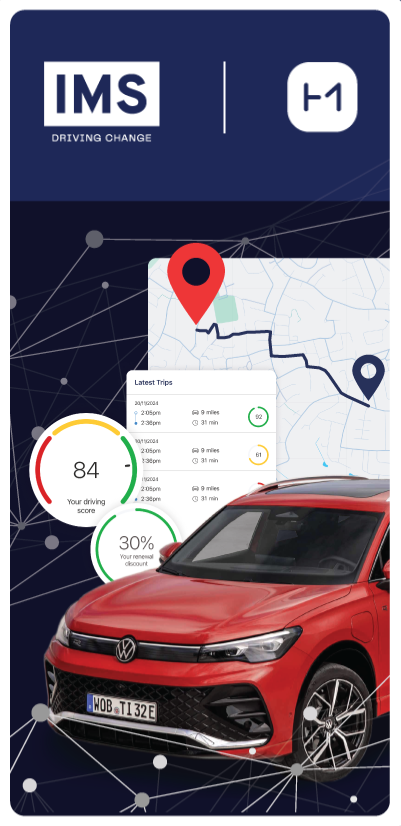

Cheshire, UK – IMS, the telematics and connected insurance technology provider, has completed an integration that allows embedded sensor data from Volkswagen passenger-vehicles to be converted into risk-based ‘Pay How You Drive’ scoring outputs for the first time.
How does this OEM data integration enhance connected insurance programmes?
Delivered through IMS’ partnership with High Mobility, the Germany-based OEM data aggregator, the work marks a practical milestone in IMS’ ongoing investment in embedded, OEM-sourced data as a complementary input to smartphone-based telematics programmes.
Following a successful pilot, IMS has made the integration available for insurer evaluation. The capability demonstrates how OEM data can be translated into underwriting-ready outputs within IMS’ One App, without requiring changes to insurer workflows.
Why is OEM-sourced data important for future Pay How You Drive telematics?
Steve Kerrigan, VP Growth (EMEA) at IMS, said: “This is an important flag in the ground for IMS and for the wider market. We’ve done the engineering and operational ‘plumbing’ required to bring Volkswagen passenger-vehicle data into our IMS One App smartphone telematics framework and process it into risk-based scores and data feeds for motor underwriters.
“While OEM-sourced data is not yet the go-to standard for Pay How You Drive pricing, it would be a mistake for insurers not to be building readiness now, particularly as OEM data sets evolve and vehicle-native signals become more accessible.”
The integration supports a range of Volkswagen models currently available via the platform, including the ID battery-electric vehicle range and popular SUVs and MPVs such as Tiguan, T-Roc and Touran.
Which Volkswagen vehicles can contribute OEM data to telematics scoring?
IMS expects the market to move towards a “mixed economy” approach in the future, where Pay How You Drive programmes combine smartphone-derived behavioural data analysis with selected OEM-derived data points (for example, to provide correlative event data such as ADAS system activations, or improve mileage/odometer confidence for pay-per-mile propositions).
How will OEM data complement smartphone telematics in connected insurance?
Kerrigan added: “The insurance industry has been discussing embedded OEM data for years, but commercial and technical realities have slowed adoption, made harder by the well-publicised challenges faced by some standalone OEM data aggregator platforms.
What challenges have historically limited OEM data adoption in insurance?
“Our approach is deliberately data-agnostic. We support smartphone telematics at scale today, and we’re continuing to build the capability to incorporate OEM data where it adds value, as data quality and commercial models continue to improve.”